
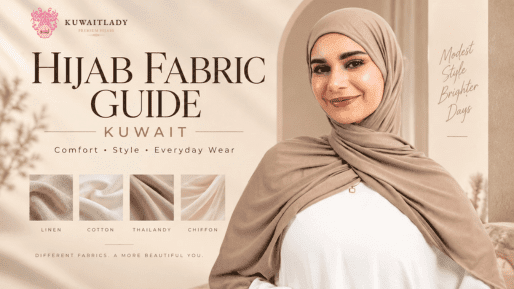
Which Hijab Fabric Is Best in Kuwait?
The best hijab fabric in Kuwait depends on the weather, occasion, styling preference, and level of comfort you need. For Kuwait's hot climate, breathable and lightweight fabrics such as linen and cotton are excellent choices for everyday wear, while fabrics such as Thailandy, modal, and decorative shawl fabrics can offer different combinations of drape, softness, and styling versatility.
Choosing the right hijab fabric can make a significant difference. A fabric that looks beautiful but feels too warm may not be practical for daily use, while a lightweight fabric may be perfect for summer but not provide the structure you want for a formal look.
For women shopping for hijabs in Kuwait, the ideal approach is to have different fabrics for different situations rather than relying on one material for every occasion.
Kuwait Lady offers several fabric categories, including Thailandy, linen, printed linen, cotton, and Kashmiri shawls, allowing you to choose according to your personal style and the conditions in which you plan to wear your hijab.
Why Does Hijab Fabric Matter in Kuwait?
Kuwait's climate makes fabric selection particularly important.
A hijab sits close to the head and neck, so the material can influence how comfortable you feel throughout the day. During hot weather, a heavy or poorly ventilated fabric may feel uncomfortable, while a breathable material can feel significantly lighter.
Fabric also affects:
-
Breathability
-
Weight
-
Draping
-
Grip
-
Texture
-
Opacity
-
Styling
-
Wrinkling
-
Ease of maintenance
-
Overall appearance
For this reason, choosing a hijab should not be based only on colour or pattern.
Two hijabs can have similar designs but feel completely different because they use different fabrics.
Hijab Fabric Guide Kuwait: Quick Comparison
|
Hijab Fabric |
Breathability |
Drape |
Structure |
Best For |
Kuwait Climate |
|
Linen |
Excellent |
Natural |
Medium |
Hot weather & everyday wear |
Excellent |
|
Cotton |
Excellent |
Medium |
Medium |
Daily wear |
Excellent |
|
Thailandy |
Good |
Excellent |
Medium |
Stylish everyday & occasion wear |
Very Good |
|
Modal |
Good |
Soft & fluid |
Low to medium |
Comfortable styling |
Very Good |
|
Printed Linen |
Excellent |
Natural |
Medium |
Casual & colourful looks |
Excellent |
|
Kashmiri Shawl |
Depends on fabric |
Flowing |
Medium to high |
Winter & formal styling |
Seasonal |
|
Chiffon |
Moderate |
Flowing |
Medium |
Formal & occasion wear |
Good for short-duration wear |
This table provides a general comparison. The actual feel and performance can vary depending on the specific fabric construction, thickness, finishing, and blend.
1. Linen Hijab: A Strong Choice for Kuwait's Heat

Linen is one of the fabrics worth considering when comfort and breathability are priorities.
Linen is known for its natural texture and airy feel. It can be particularly suitable for warm-weather dressing because it generally allows air to circulate more easily than many heavier fabrics.
For women who spend time outdoors or prefer a natural-looking hijab, linen can be an excellent addition to the wardrobe.
Why choose linen?
Linen offers several useful characteristics:
-
Lightweight feel
-
Breathable construction
-
Natural texture
-
Relaxed appearance
-
Suitable for warm weather
-
Easy to pair with casual clothing
-
Works well with minimalist outfits
One thing to remember is that linen can naturally have a slightly textured and relaxed appearance. If you prefer a perfectly smooth hijab with a polished finish, another fabric may suit you better.
However, if you appreciate a natural and effortless aesthetic, linen is an excellent option.
For shoppers specifically looking for breathable options, explore Kuwait Lady's linen hijab collection for different linen-based styles.
2. Cotton Hijab: Comfortable for Everyday Wear

Cotton is another practical choice for Kuwait.
It is widely appreciated because of its breathable and comfortable nature. Cotton hijabs can be particularly useful for women who wear hijabs for long periods and want a fabric that feels familiar and easy to manage.
Cotton also tends to provide a reasonable balance between comfort and structure.
Benefits of cotton hijabs
-
Breathability:
Cotton can allow air to move through the fabric, helping create a more comfortable experience in warm conditions. -
Comfort:
The natural feel of cotton makes it suitable for long hours of wear. -
Versatility:
Cotton hijabs can work with casual outfits, everyday abayas, workwear, and travel clothing. -
Practical styling:
Depending on the construction, cotton can provide enough grip to help the hijab stay in position. -
Everyday use:
Cotton is particularly useful when you want a dependable hijab rather than a fabric designed only for special occasions.
If you're specifically looking for cotton options, Kuwait Lady's cotton hijab collection in Kuwait is worth exploring.
3. Thailandy Hijab: Soft Drape and Versatile Styling

Thailandy hijabs have become a popular option for women who want a combination of comfortable wear and elegant draping.
Compared with fabrics that have a more structured appearance, Thailandy-style fabrics can provide a softer and more flowing silhouette.
This makes them suitable for women who enjoy creating layered or softly draped hijab styles.
Why choose Thailandy?
A Thailandy hijab can be useful when you want:
-
A soft appearance
-
Elegant draping
-
Versatile styling
-
A polished finish
-
Everyday fashion flexibility
-
An alternative to plain cotton or linen
The fabric can be particularly appealing when you want your hijab to look stylish without requiring complicated styling techniques.
For women interested in exploring different colours and designs, the Thailandy hijab collection provides a dedicated selection.
4. Printed Linen Hijabs: Breathability With More Personality

If you like linen but find plain colours too basic, printed linen can provide a good middle ground.
Printed linen combines the natural visual character of linen with patterns, colours, and decorative designs.
This can make it particularly useful for women who wear neutral abayas and want to add colour through their hijab.
Why choose printed linen?
Printed linen can provide:
-
Breathable fabric characteristics
-
Natural texture
-
Floral patterns
-
Decorative prints
-
More colour variety
-
Casual styling flexibility
-
Easy coordination with plain outfits
A printed hijab can become the main accessory of an outfit.
For example, if you're wearing a simple black abaya, a printed linen hijab can add colour and pattern without requiring additional accessories.
Kuwait Lady's printed linen collection is an option for shoppers who want linen with more visual variety.
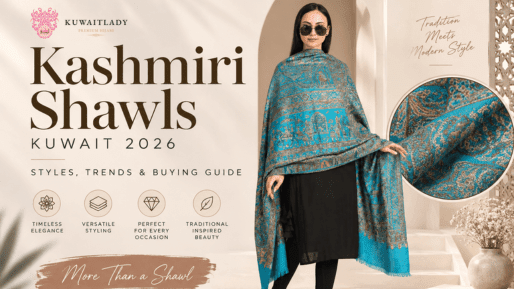
5. Kashmiri Shawls: Decorative and Seasonal Styling

Kashmiri shawls are different from lightweight everyday hijab fabrics.
Their main appeal often comes from their decorative patterns, traditional-inspired aesthetics, and elegant appearance.
They can be particularly suitable for cooler weather, formal occasions, evening events, and situations where you want an accessory with more visual impact.
Kashmiri-inspired designs may feature:
-
Floral motifs
-
Paisley patterns
-
Botanical details
-
Decorative borders
-
Multicolour designs
-
Traditional-inspired patterns
Because these shawls can vary significantly in material and weight, always consider the specific product when choosing one for Kuwait's climate.
For special occasions or cooler-season styling, explore the Kashmiri shawl collection.
Linen vs Cotton Hijab: Which Is Better for Kuwait?
Linen and cotton are two of the most practical fabric choices for warm-weather hijab styling.
But which one is better?
The answer depends on what you prioritise.
Linen
Choose linen if you prefer:
-
A lightweight feel
-
Airy construction
-
Natural texture
-
Relaxed styling
-
Warm-weather comfort
-
A slightly textured appearance
Linen is especially appealing for women who want a breathable hijab for hot weather.
Cotton
Choose cotton if you prefer:
-
Comfortable everyday wear
-
A familiar natural fabric feel
-
Slightly more structure
-
Easy daily styling
-
Versatility
Cotton can be a strong option when you want one dependable fabric for regular wear.
The simple answer
For maximum airy comfort, linen is an excellent choice. For dependable everyday versatility, cotton is an excellent choice.
There isn't one universal winner because personal preference matters.
Thailandy vs Linen: Which Hijab Should You Choose?
These fabrics serve slightly different styling purposes.
Choose linen when:
You prioritise breathability and natural texture.
Choose Thailandy when:
You prefer a softer, more flowing drape and a polished appearance.
Linen generally gives an outfit a more natural and relaxed character.
Thailandy can create a softer and more fluid appearance.
Therefore, your choice should depend on whether comfort and breathability or draping and styling are your primary concerns.
Cotton vs Thailandy: What's the Difference?
Cotton and Thailandy can both work for everyday hijab styling, but they create different visual effects.
Cotton can provide a more practical and structured feel, depending on the weave.
Thailandy fabrics are often selected for their soft drape and elegant appearance.
Cotton may be better for:
-
Long everyday wear
-
Simple hijab styles
-
Practical outfits
-
Casual clothing
-
Women who prefer more structure
Thailandy may be better for:
-
Soft draping
-
Layered styles
-
Elegant outfits
-
Fashion-focused styling
-
Women who prefer fluid fabrics
Which Hijab Fabric Is Best for Summer in Kuwait?
For summer, breathability and lightweight comfort should be your first priorities.
Linen and cotton are two strong options to consider.
Linen for Summer
Linen's breathable nature and lightweight feel make it particularly suitable for hot-weather styling.
It can work well for daytime use when paired with lightweight clothing.
Cotton for Summer
Cotton is another reliable choice.
Its breathable characteristics and comfortable feel make it practical for everyday wear.
Printed Linen for Summer
If you want to combine warm-weather comfort with more visual interest, printed linen can be a strong choice.
The pattern allows you to add personality without relying on heavier accessories.
Which Hijab Fabric Is Best for Winter in Kuwait?
Kuwait's winter is considerably milder than winter in many other countries, but temperatures can still become cooler, particularly in the evening.
During this period, you can introduce slightly warmer fabrics or decorative shawls.
Kashmiri-inspired shawls can work well for:
-
Winter evenings
-
Outdoor gatherings
-
Formal events
-
Dinner occasions
-
Travel
-
Layered outfits
The key is choosing the appropriate weight.
You don't necessarily need a very heavy winter fabric for Kuwait.
Which Hijab Fabric Is Best for Office Wear?
For office wear, look for a balance between comfort, structure, and polished appearance.
Cotton can be a practical choice if you want a dependable everyday fabric.
Thailandy can work well when you prefer softer draping and a more polished appearance.
Linen can also work in professional settings, particularly when styled neatly with a structured abaya.
The most important consideration is not just the fabric but how you style it.
A neatly arranged hijab in a simple colour can look professional regardless of whether it is cotton, linen, or Thailandy.
Which Hijab Fabric Is Best for Formal Occasions?
For formal occasions, appearance often becomes more important than maximum breathability.
Thailandy and decorative shawl fabrics can provide more elegant draping and visual detail.
A printed linen hijab can also work for less formal gatherings where you want colour without excessive decoration.
For weddings and evening events, consider:
-
Draping
-
Pattern
-
Colour
-
Fabric finish
-
Overall outfit balance
If the abaya or dress is already heavily embellished, a simpler hijab may look more elegant.
If the outfit is simple, a decorative hijab can become the statement piece.
How to Choose a Hijab Fabric Based on Your Lifestyle
Your daily routine should influence your choice.
If you spend a lot of time outdoors
Prioritise breathable and lightweight fabrics.
Linen and cotton can be practical choices.
If you spend most of your day indoors
You have greater flexibility.
You can choose based on drape, appearance, and personal preference.
If you travel frequently
Choose fabrics that are easy to pack, style, and maintain.
A versatile fabric that works in multiple environments can be more useful than one designed for a single occasion.
If you attend many formal events
Keep at least a few more decorative options in your wardrobe.
Thailandy and elegant shawl styles can help create more sophisticated outfits.
How Fabric Affects Hijab Styling
The fabric doesn't just affect comfort—it changes the way the hijab behaves.
Lightweight fabrics
These can create a softer appearance and may be easier to layer.
However, very lightweight materials may require additional styling support depending on the fabric.
Structured fabrics
These tend to hold their shape more easily.
They can be useful for defined folds and neat everyday styles.
Flowing fabrics
These create elegant draping and movement.
They are particularly suitable when you want a softer, more sophisticated appearance.
Textured fabrics
Textured fabrics can add visual interest even when the hijab is a single colour.
Linen is a good example of a fabric where natural texture can become part of the overall aesthetic.
How to Choose the Right Hijab Fabric for Your Abaya
Your hijab and abaya should complement each other.
Plain abaya + patterned hijab
This is one of the easiest combinations.
A printed or decorative hijab can become the statement element.
Embellished abaya + plain hijab
When the abaya already contains embroidery or decoration, a simple hijab can prevent the outfit from looking too busy.
Neutral abaya + colourful hijab
This is an excellent way to introduce colour into your wardrobe.
Patterned abaya + subtle hijab
If your clothing already contains strong patterns, choose a fabric and colour that provide balance.
Best Hijab Fabrics in Kuwait: A Practical Guide
If you're still unsure, this simple guide can help:
For hot summer days:
Choose linen or cotton.
For everyday wear:
Cotton is a dependable option, while linen is excellent if you prefer a lighter natural feel.
For soft draping:
Consider Thailandy.
For colourful casual styling:
Try printed linen.
For formal occasions:
Choose an elegant flowing or decorative fabric.
For cooler evenings:
Consider a Kashmiri-inspired shawl or another warmer layering option.
For a versatile wardrobe:
Keep several fabric types rather than relying on one.
Why Choose Different Hijab Fabrics From Kuwait Lady?
A versatile hijab wardrobe is much easier to create when you have access to different fabric types.
Kuwait Lady offers different collections that cater to different styling requirements, including lightweight and breathable options as well as decorative and traditional-inspired styles.
This means you can choose your hijab based on the occasion instead of trying to make one fabric work for every situation.
For example, linen or cotton can become part of your everyday rotation, while Thailandy can be used when you want softer draping and a more polished appearance.
Printed options can introduce colour, while Kashmiri-inspired shawls can add traditional-inspired detail for cooler weather and special occasions.
The best approach is to build a collection around comfort, climate, occasion, and personal style.
Conclusion
Choosing the right hijab fabric in Kuwait is about finding the balance between comfort, climate, styling, and occasion.
For hot weather, breathable fabrics such as linen and cotton can be excellent everyday choices. Linen offers a natural, airy feel, while cotton provides dependable comfort and versatility.
Thailandy can be a strong option when you want softer draping and a more polished appearance. Printed linen is useful when you want to add colour and pattern while maintaining the natural character of linen.
For cooler evenings and special occasions, Kashmiri-inspired shawls can provide a more decorative and layered appearance.
There is no single fabric that is perfect for every woman or every situation. Instead, the best hijab wardrobe combines different fabrics so you can choose according to the weather, occasion, outfit, and your personal preferences.
For women searching for a Hijab Fabric Guide Kuwait, understanding these differences makes shopping easier and helps ensure that every hijab you choose has a practical purpose in your wardrobe.
FAQs
Q1. What is the best hijab fabric for Kuwait?
Linen and cotton are excellent choices for hot weather because of their breathable and comfortable characteristics.
Q2. Is linen good for hijabs in Kuwait?
Yes. Linen is a strong option for warm weather because of its lightweight feel and natural breathability.
Q3. Is cotton good for everyday hijab wear?
Yes. Cotton is comfortable, versatile, and suitable for regular everyday use.
Q4. Is Thailandy hijab suitable for Kuwait?
Yes. Thailandy can be a good option when you want comfortable styling with soft and elegant draping.
Q5. Which hijab fabric is best for summer?
Linen and cotton are among the most practical choices for summer in Kuwait.
Q6. Which hijab fabric is best for formal occasions?
Flowing and decorative fabrics can work well for formal occasions. The best choice depends on the outfit and desired look.
Q7. Are printed linen hijabs good for everyday wear?
Yes. Printed linen can combine the lightweight character of linen with patterns and colours suitable for everyday styling.
Q8. Are Kashmiri shawls suitable for Kuwait?
They can be particularly useful during cooler months, evenings, formal occasions, and air-conditioned environments.
Q9. Should I have different hijab fabrics?
Yes. Different fabrics are useful for different weather conditions, occasions, and styling preferences.
Q10. How do I choose a hijab fabric?
Consider breathability, comfort, drape, fabric weight, maintenance, occasion, and how well it works with your existing wardrobe.


Leave a comment
This site is protected by hCaptcha and the hCaptcha Privacy Policy and Terms of Service apply.