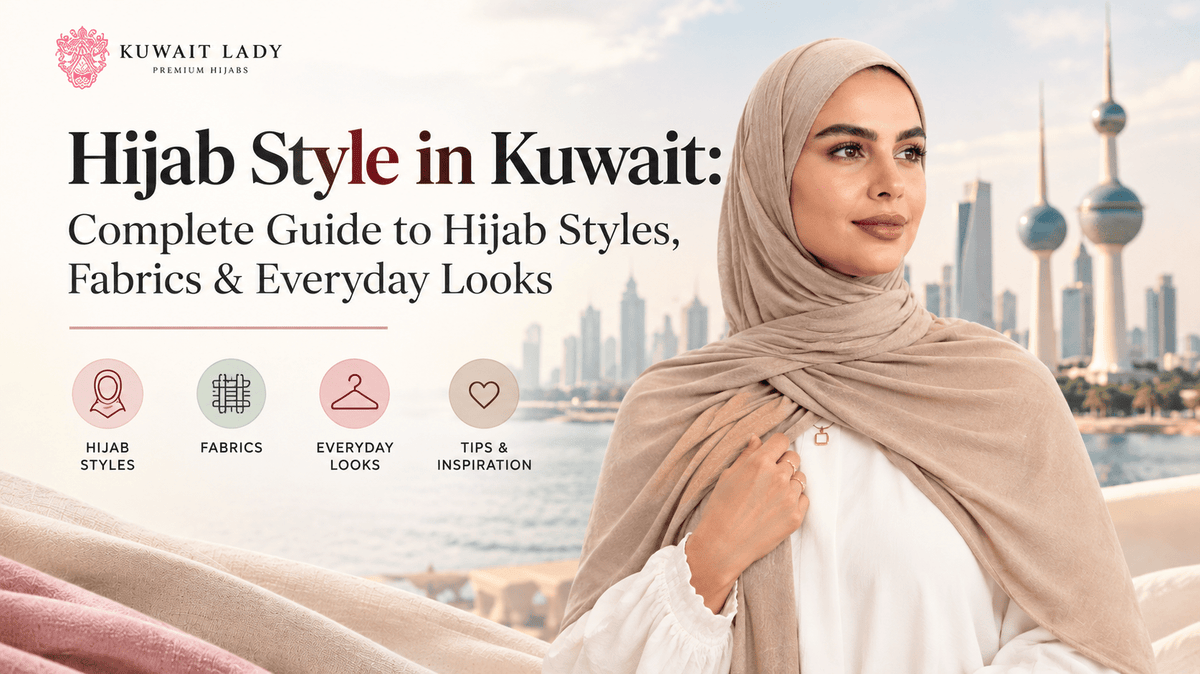
What Is the Best Hijab Style in Kuwait?
The best hijab style in Kuwait is one that balances comfort, fabric, coverage, practicality, and personal fashion preferences. Because Kuwait's weather can be hot outdoors while indoor spaces are often strongly air-conditioned, a hijab style should be easy to adjust and suitable for the fabric being worn.
There is no single hijab style that works for every woman or every occasion. A loose, flowing style may be comfortable for a casual day, while a neat, structured style can be more appropriate for work. For weddings, dinners, family gatherings, or formal occasions, the way the scarf is draped can become an important part of the overall outfit.
This is why Kuwait Lady offers different scarf designs and materials that can be styled in multiple ways. Instead of choosing a hijab based only on its colour, you can consider the fabric, drape, texture, size, and occasion.
A good hijab wardrobe for Kuwait can include:
- Lightweight scarves for warm weather
- Cotton options for everyday wear
- Linen for breathable, textured looks
- Smooth scarves for polished outfits
- Comfortable styles for travel
- Dressier scarves for occasions
- Neutral shades for everyday abayas
- Printed and textured options for statement looks
The goal is not to follow one specific hijab style. It is to create a collection of styles that works with your lifestyle in Kuwait.
What Is a Hijab Style?
A hijab style refers to the way a hijab or scarf is wrapped, folded, pinned, draped, and arranged around the head and shoulders.
The same scarf can create completely different looks depending on how it is styled.
For example, a rectangular scarf can be:
- Wrapped close to the face
- Draped loosely around the shoulders
- Styled with one side longer than the other
- Folded for a cleaner appearance
- Layered around the neck
- Pinned under the chin
- Left flowing over an abaya
This means hijab styling is not only about the scarf itself. It is also about how the scarf interacts with your face shape, outfit, neckline, abaya, fabric and the occasion.
In Kuwait, hijab styles are often paired with abayas, modest dresses, workwear and occasion outfits. A simple change in the way the scarf is draped can make an everyday outfit look more polished without changing the entire wardrobe.
The most practical approach is to learn a few reliable styles rather than trying to master dozens of complicated techniques.
Different Types of Hijab Styles
There are many ways to style a hijab, but the following styles are particularly useful for building a versatile wardrobe.
The Classic Wrapped Hijab
The classic wrapped hijab is one of the easiest styles for everyday use.
The scarf is positioned around the head and wrapped neatly around the neck, with the ends either left hanging or arranged over the shoulders.
It works particularly well with:
- Everyday abayas
- Office outfits
- Shopping
- University or work
- Casual gatherings
The simplicity of this style makes it easy to repeat with different colours.
The Loose Draped Hijab
A loose draped style allows more fabric to fall naturally around the shoulders.
This can create a softer and more relaxed appearance.
It is particularly suitable when you want your hijab to become part of the overall silhouette rather than sitting tightly around the face.
Flowing materials such as modal, Thailandy and some linen styles can work well for this type of look.
The Side-Draped Hijab
With a side-draped style, one end of the scarf is brought across or around the neck and allowed to fall over one shoulder.
This creates an asymmetrical appearance and can add movement to a simple abaya.
A side drape can be especially effective with plain abayas because the scarf becomes a more noticeable part of the outfit.
The Layered Hijab Style
Layering involves creating multiple folds or sections of fabric around the face and neck.
It can provide more structure and visual depth.
However, the amount of layering should depend on the fabric. A thick material can become bulky if too many layers are created, while a lightweight scarf may allow more flexibility.
The Minimal Hijab Style
A minimal style focuses on clean lines and limited folds.
It works particularly well with modern abayas and neutral outfits.
For women who prefer a polished appearance without excessive volume, this can be an excellent everyday approach.
The Elegant Occasion Style
For formal occasions, the hijab can be styled with more attention to draping, texture and proportions.
A chiffon, satin-finish or silk-style scarf can create a softer appearance, particularly when paired with an elegant abaya or occasion dress.
The Turban-Inspired Style
A turban-inspired arrangement wraps the fabric closer around the head and creates a more structured silhouette.
This style requires choosing the scarf carefully because stretch, length and fabric thickness can affect how easily it can be arranged.
It is generally better suited to situations where the desired look calls for a more fashion-forward approach.
Different Materials for Hijab Styling
The fabric you choose can determine which hijab styles are easiest to achieve.
Cotton Hijab
Cotton is a versatile option for everyday styling.
It can offer enough structure for neat folds while still being suitable for casual looks.
Cotton can work well for:
- Work
- Daily errands
- Travel
- Regular abaya styling
- Family gatherings
For women who want a reliable everyday fabric, cotton can be a useful foundation.
Linen Hijab
Linen has a naturally textured appearance and can work well for warm-weather styling.
Its texture can make a simple hijab style look more interesting without requiring complicated folds.
Linen is particularly suited to:
- Casual outfits
- Daytime looks
- Summer wardrobes
- Relaxed abayas
- Minimal styling
Thailandy Hijab
Thailandy can provide a lightweight, smooth and flowing appearance.
It can be useful when you want a scarf that moves naturally while still creating a polished finish.
It works with both everyday and more refined styles.
Modal Hijab
Modal is known for its soft feel and flowing drape.
It can be particularly useful for loose hijab styles because the fabric naturally falls around the shoulders.
It is a good option for women who prefer a softer, less structured appearance.
Jersey Hijab
Jersey has stretch, which can make it convenient for women who prefer a secure fit.
It can be useful for:
- Travel
- Busy days
- Casual outfits
- Everyday wear
Its stretch also makes certain wrapped styles easier to maintain.
Chiffon Hijab
Chiffon has a lightweight and flowing character.
It is commonly associated with more elegant styling and can work well for:
- Weddings
- Formal dinners
- Evening events
- Special gatherings
Because chiffon can be more slippery than some everyday fabrics, the styling technique and accessories used with it can matter.
Silk and Satin-Style Fabrics
Silk and satin-style scarves can introduce a smooth finish and subtle shine.
They are often better suited to outfits where the scarf is intended to contribute to the overall elegance of the look.
Which Hijab Style Suits Kuwait's Conditions?
When choosing a hijab style in Kuwait, the fabric and the weather should be considered together.
A style that feels comfortable indoors may not feel equally comfortable outdoors in warmer weather.
During hot conditions, lightweight styles can be more practical. Instead of creating many thick layers around the neck, a simpler wrap or loose drape can help keep the overall styling lighter.
For Hot Outdoor Days
Consider:
- Lightweight cotton
- Linen
- Thailandy
- Lightweight modal
A simple wrap or loose drape can prevent unnecessary bulk.
For Air-Conditioned Indoor Spaces
Kuwait's strong indoor air conditioning means that slightly more substantial materials can also have a place in your wardrobe.
Cotton, jersey and some structured fabrics can work well when you spend most of your day indoors.
For Long Days Outside and Inside
Choose a versatile style that can be adjusted easily.
A scarf that can be loosened outdoors and arranged neatly indoors can be particularly practical.
For Everyday Abaya Wear
A simple wrap, side drape or minimal style usually provides enough versatility without requiring excessive styling time.
For Formal Events
Comfort remains important, but the focus can shift toward drape, texture and visual finish.
Chiffon, satin-style and elegant textured scarves can help create a more occasion-focused appearance.
Comparison Between Different Hijab Styles
|
Hijab Style |
Overall Look |
Comfort |
Styling Time |
Best For |
|
Classic Wrap |
Neat & versatile |
High |
Low |
Everyday & office |
|
Loose Drape |
Soft & relaxed |
High |
Low |
Casual & warm weather |
|
Side Drape |
Elegant & asymmetrical |
High |
Medium |
Abayas & gatherings |
|
Layered Style |
Structured & polished |
Medium |
Medium |
Work & occasions |
|
Minimal Style |
Clean & modern |
High |
Low |
Everyday & office |
|
Occasion Style |
Refined & elegant |
Medium |
Medium/High |
Weddings & events |
|
Turban-Inspired |
Fashion-forward |
Varies |
Medium |
Contemporary outfits |
There is no universal winner.
For everyday life in Kuwait, a classic, minimal or loose style may be easier to maintain.
For events, a side-draped or layered style can add more visual interest.
The most important factor is whether the style works with the fabric you have chosen.
Which Hijab Style Should You Use and When?
Knowing which style to use for each situation can make getting dressed much easier.
For Work
Choose a clean and structured style.
A classic wrap or minimal hijab can work particularly well with professional abayas, trousers, long dresses and coordinated modest outfits.
Neutral colours can also make morning outfit planning easier.
For Everyday Shopping and Errands
A simple wrap or loose drape is usually practical.
You want something that looks polished without requiring excessive time in front of the mirror.
For Travel
Comfort and stability become especially important.
A jersey or cotton scarf can be useful for women who prefer a secure feel. A simple style is also easier to adjust during long journeys.
For Casual Gatherings
A side drape or lightly layered style can make a simple outfit feel more styled.
You can also introduce a patterned or textured scarf while keeping the rest of the outfit neutral.
For Family Events
This is an opportunity to experiment with colour, texture and drape.
A shaded scarf can coordinate multiple colours in an outfit, while a textured scarf can add detail to a plain abaya.
For Weddings and Formal Events
A more elegant drape can complement a formal outfit.
Chiffon, satin-style or other refined fabrics can work particularly well when the scarf is part of the overall occasion styling.
For Summer
Keep the styling simple and avoid unnecessary layers.
Lightweight fabrics such as linen, cotton and Thailandy can be considered depending on the look you prefer.
Kuwait Lady Has Scarves for Different Hijab Styles
A major advantage of shopping for scarves from a collection with different designs and fabrics is that you can experiment with your hijab style without having to change your entire wardrobe.
Kuwait Lady provides different scarf options that can be adapted to various looks.
Shaash Turkey Mini
For a more structured and compact styling approach, a smaller scarf can create a neat appearance while allowing you to experiment with different folds.
You can explore the Shaash Turkey Mini scarf as an option for creating a more defined look.
Kleenex Scarf
A lightweight scarf can be useful when you prefer a softer and less bulky styling approach.
The Kleenex Scarf can be considered when building looks where the scarf needs to remain light and easy to arrange.
Linen Cotton Plain
A blend of linen and cotton can provide an interesting balance between natural texture and everyday versatility.
The Linen Cotton Plain scarf can work particularly well with simple abayas and understated outfits.
Turkey Chafsa Scarf
A Turkish-inspired scarf can add a different visual character to your hijab wardrobe.
The Turkey Chafsa Scarf can be incorporated into more structured or statement-focused hijab styling.
Shaal Mini
A compact scarf option can be useful when you want a different proportion or a cleaner styling approach.
The Shaal Mini scarf gives you another option for experimenting with your everyday hijab looks.
The important point is that these scarves do not need to be styled in only one way. The same scarf can often create different appearances depending on how it is folded, wrapped and draped.
Why Choose Kuwait Lady for Hijab Styles?
When building a hijab wardrobe in Kuwait, variety is valuable.
Instead of purchasing scarves that all have the same texture and drape, Kuwait Lady allows you to explore different designs and materials for different styling requirements.
Different Materials
Different fabrics allow you to create different silhouettes.
A cotton scarf may create more structure, while a flowing material can produce a softer drape.
Different Designs
Plain, shaded, printed, textured and border styles can all change the appearance of the same abaya.
This gives you more options without constantly buying new outfits.
Styles for Different Occasions
A scarf for work does not have to look like a scarf for a wedding.
Having different options makes it easier to create a wardrobe that covers:
- Everyday wear
- Office outfits
- Travel
- Casual gatherings
- Family events
- Formal occasions
Kuwait-Friendly Wardrobe Planning
The Kuwait climate makes versatility particularly useful.
Rather than creating a wardrobe around one fabric, you can choose lighter options for warmer outdoor conditions and more substantial or polished materials for indoor and formal environments.
Easy Outfit Coordination
A good scarf collection should make outfit planning easier.
Start with versatile neutral colours and gradually add shades, patterns and textures that complement your abayas.
Building a Smaller but More Useful Collection
You do not need an enormous scarf collection.
A practical starting point can be:
|
Purpose |
Suggested Style |
|
Everyday |
Classic or minimal |
|
Office |
Structured and clean |
|
Summer |
Lightweight and loose |
|
Travel |
Comfortable and secure |
|
Casual gathering |
Side drape |
|
Formal event |
Elegant layered style |
This approach helps you buy scarves based on function rather than impulse.
Simple Tips to Improve Your Hijab Style
Even an expensive or beautiful scarf may not look right if the styling does not complement the outfit.
Match Volume With the Outfit
If your abaya is heavily embellished, a simpler hijab style can create balance.
If the abaya is very minimal, a textured or layered scarf can add interest.
Don't Over-Layer in Hot Weather
Too many folds around the neck can make a lightweight scarf feel unnecessarily heavy.
For warmer days, try a cleaner arrangement.
Use Colour Strategically
A neutral scarf can soften a bold outfit.
A contrasting scarf can make a simple abaya more interesting.
A matching scarf can create a monochromatic appearance.
Consider Face-Framing
The way the scarf frames your face can change the overall appearance of the hijab.
Try different levels of looseness and folds to find what feels natural and comfortable.
Let the Fabric Do Some of the Work
Not every scarf needs complicated styling.
Some fabrics naturally create beautiful folds and movement. In those cases, a simple drape can be more effective than excessive pinning.
Conclusion
Finding the right hijab style in Kuwait is ultimately about understanding your lifestyle, your wardrobe and the conditions in which you will wear the scarf.
There are many options, from the classic wrap and minimal hijab to loose drapes, side styles, layered looks and more occasion-focused arrangements.
The fabric matters just as much as the styling technique. Cotton can provide everyday versatility, linen can add natural texture, Thailandy can create a lightweight flowing appearance, modal can provide softness, jersey can offer stretch, and chiffon or satin-style materials can elevate formal outfits.
For Kuwait's climate, having several options is often more practical than depending on one scarf for every situation.
Kuwait Lady makes it easier to build that variety, with different scarf designs and styles that can be incorporated into everyday, professional, casual and occasion wardrobes.
The best hijab style is ultimately the one that makes you feel comfortable, confident and appropriately dressed for the occasion.
FAQs
Q1. What is the best hijab style for everyday wear in Kuwait?
Ans. A classic, minimal or loose hijab style is generally practical for everyday wear because it is easy to style and adjust.
Q2. Which hijab style is best for hot weather?
Ans. A simple, lightweight style with fewer layers can be more comfortable in hot weather. Linen, cotton and lightweight Thailandy can be considered.
Q3. Which scarf material is easiest to style?
Ans. It depends on personal preference. Cotton can provide structure, jersey offers stretch, while modal and Thailandy can provide softer, flowing drapes.
Q4. What hijab style is suitable for work?
Ans. A classic wrap or clean minimal style can create a polished professional appearance without requiring complicated styling.
Q5. Which hijab style is suitable for weddings?
Ans. An elegant layered or side-draped style can work well for weddings, particularly when paired with chiffon, satin-style or other refined fabrics.
Q6. Where can I find different scarves for hijab styling in Kuwait?
Ans. Kuwait Lady offers a range of scarf styles and materials that can be used to create different everyday, casual, professional and occasion looks.


Leave a comment
This site is protected by hCaptcha and the hCaptcha Privacy Policy and Terms of Service apply.